Wednesday, November 3, 2010

That is just how it is

  The real world financial system might seem dishonest to some. It may even seem like fraud and trickery. But the the truth is, this is the best system I can think of. And it works really quite well. The standard of living has been better today than any time in history because people are no longer physically bound to the output of gold and silver coins. We no longer say, we can not feed the poor in our country because we lack the gold and silver to finance such welfare spending. Instead, we just print the Central Government Notes, and welfare spending finances itself.

  This is because there is not really that much scarcity in the world, and our production frontier is almost limitless. The only question then becomes, how are we going to finance it. We going to wait 10 yrs to accumulate enough gold coins to finance it? That only causes us to allocate unnecessary pools of labor towards the mining of gold and silver ore. Or are we going to finance it now by simply issuing the needed Central Government Notes.


  By eliminating gold and silver, we in essence automate the financial system much the same way machine tools and robots help automate manufacturing.


Internal debt is not a real debt

  As stated in a previous article, a internal debt is not a real debt. And taxpayers do not pay for the internal debt. Otherwise the internal debt would actually decrease and eventually be paid off. When in reality, no one ever bothers to collect enough in tax revenue to actually pay off the internal debt. In contrast, spending normally exceeds tax revenue every year helping to further add to the internal debt. Quite often, the internal debt is a non issue.

Central Government lending practices are behind business cycles

   Business cycles are not a natural state of affairs as before. They used to be. They are not so today. Back during the gold standard, banks would normally lend more money then they held in gold reserves. Because the money supply was not tracking gold output, the economy can grow even with a stagnant supply of gold. Even when the standard existed, the money supply always deviated from gold reserves because trying to finance economic expansion through the slow growth rate of gold was just hair wringing.


  Thus the economy often grew whenever banks behaved less responsible and accountable to their clients who placed deposits in gold. The production of gold certificates and not gold reserves thus helped generate massive economic growth.


  The economy crashed whenever there was a run on these major banks, meaning people rushed to withdraw their gold with the certificates they held. The banks never having the gold to pay for the certificates had no choice but to slip away as the overall economy crumbled from having no further source of financing.

  People, having short memories, eventually get over their financial losses and begin placing trust in these financial institutions again. The lending policies where more certificates were printed than reserves held in gold helped rejuvenate the economy again.

  But this is 21st century, there is no gold standard. There is no ocean, it is just an artificial wave pool. People do not track the invisible gold reserves of their banks, they track central government interest rates and what the lending policies are and are expected to be.

Tuesday, November 2, 2010

Arbitrary Currency values

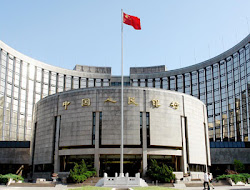
   Currency value as well as the volume of currency determines the size and wealth of a nation. But its quite misleading since both currency value and volume is often manipulated. In truth, China is most likely the world's largest economy by any standard besides currency. On any given year, it produce nearly 5 times more steel, 5 times more concrete, 5 times more meat, 5 times more wheat, 5 times more consumer goods, 5 times more industry, 5 times more in just about every thing compared to its next closest competitor.

  But China will never be recognized as the world's largest economy because both the value and volume of China's Currency remains depressed by its Central Government.

The formula behind economic expansion and economic decline

  In a previous article, it was discussed how managing the money supply can lead to employment or unemployment. And much the same way, the money supply can be manipulated to cause economic expansion or economic decline.

  When the central government increases the money supply or when private financial institutions increase the money supply. Public and Private spending increases as a result of these new grants and loans. Highways, Research and Development, Department Stores, and Super Markets get grants and loans to begin operation.

  When Financial institutions loan money for businesses, they are not necessarily using money they themselves possess. But the money they borrowed from the Central Government. If the Central Government loans 1 RMB to Private bank A at 2.5 percent interest rate. The Private Bank A cant loan to private citizens that same RMB for 2.5 percent interest rate. Bank A still needs to pay back the Central government its principle plus interest. If it fails, it risks getting seized by the Central Government. Thus Bank A must issue that loan at anything higher than 2.5 percent. It has its own operational costs to consider as well as the debt it owes to the Central Government.

  Free Market expansion occurs when these Private Banks become daring. They give out far more in loans than they had actually loaned from the Central Government. A fractional reserve lending process of 5 to 1 or 10 to 1 or whatever number they choose. This new money that enters the economy creates expansion and financial exhilaration. Financial markets boom, property prices boom, consumer prices boom, wages boom, the economy just looks unstoppable.

  A recession occurs when the Central government steps in to end the excitement. The Central Government enjoys the high levels of spending, but it does not enjoy seeing inflation since controlling inflation is one of its main pillars. As a result, the Central Government hikes interest rates to increase the price of borrowing money from the Central Government. And in turn, Private Banks hikes interest rates to increase the price of borrowing for its private citizens.

  Its easier to pay back a loan during periods of high lending because the money supply continues to expand just like more fish keep getting added to the sea. If a business takes out a 10 RMB loan to begin its start up, 10 consumers who each take out a 1 RMB loan to purchase products from that business will bring that business back to financial balance.

  However if the cost of lending increases and lending comes to a halt, then that business will never find the customers it needs to pay back its bank.

  Much like businesses are always in a scramble for Central Government Notes to pay back its bank, the Bank is always in a scramble for Central Government Notes to pay back the Central Government. The Bank does not want the business. It just wants its notes. It will confiscate the business and sell it at a loss just to come up with some notes. Because if they cant come up with the needed notes, the Central Government will come and possess the bank.

  The Central Government Bank is then able to control inflation by contracting or stagnating the money supply through these threats. 

  Of course this does not really apply to China since not only is the Chinese Central Bank owned by the Chinese government but so are its so called private lenders that loan directly to the Chinese citizenry.
Strong currency vs Weak currency Part 2

   Monetary expansion does not only take place from the central government level. It also takes place on the private level. This is because the central government possesses the government power to issue new money while the private market only possesses the power to issue new loans based on its reserve base of government money.

   The free market, through private financial institutions can give out loans to private citizens to make purchases using the currency base it holds that was loaned to it by the Central Government. Central Government loans financial institutions 1 RMB at an interest rate of 2.5 percent. And the private financial institutions loan to private citizens 10 RMB at an interest rate of 5 percent. Depending on what the government set rules happen to be, private banking can loan 10 RMB for every 1 RMB it holds. It could loan 100 RMB for every 1 RMB it holds. But most Central Governments set standards as to how far they are allowed to leverage.

  That leveraging helps increase the money supply since without those loans, new spending could not have been made to help drive up consumer prices. As a result of this, the national currency loses its value even if the Central Government is not printing new money. The national currency loses its value simply because the free market is giving out new loans.

Strong currency vs Weak currency Part 1

  There is a misconception that when the national currency weakens in value against consumer goods, then the economy is weakening and that when the national currency is strengthening in value against consumer goods, then the economy is strengthening.

  While many arguments can be made and different factors can help define the argument. For instance, we could say, "it depends".

  Commonly speaking. Not taking external forces into consideration such as RMB vs dollar. But simply looking at it plainly, such as RMB vs TV set, when a currency strengthens in value it is often a sign of a weak economy and when the currency is weakening in value, its a sign of a strong economy.

  When there is more paper currency, there is often more paper currency chasing after labor, goods, and services. Which often mean higher employment, higher spending, and higher inflation. As a result, wages increase and so do consumer prices. Economic growth is best idealized in this environment. This is why currencies tend to lose their value during economic booms.

  When there is less paper currency, there is often less paper currency chasing after labor, goods, and services. Which often mean higher unemployment, lower spending, and deflation. As a result, wages decrease and so do consumer prices. Depressions are best idealized in this environment. This is why currencies tend to strengthen in value during economic depressions.